

|
|
|
|
|
Corns
A small conical shaped area of hard skin which presses on underlying nerve endings, often causing severe pain. Corns usually occur on the toes or soles of the feet (plantar corns). A corn is simply an excess of skin cells in one spot due to pressure or friction on that part of the foot. Traditionally poor footwear has been held responsible for causing corns but we now know it is not as simple as this. If the foot is unstable, excessive pressure will fall on the toes and soles of the feet and the skin thickens on these areas for protection. Corns can easily be removed to give instant relief. However , if the underlying cause is not dealt with, the corn may return. At the Beehive & Brookland Foot Clinics, we specialise in dealing both with the corn AND the foot as a whole to seek long term improvement in your foot health.
|
 |
|
Bunions (Hallux Valgus)
Although often said to be due to poor footwear, this condition is more likely to be due to poor foot function. Incorrect stance and balance will often cause the bones of the forefoot to become distorted. Wearing orthotics (prescription insoles) in your shoes will ease the discomfort and delay the development of this condition.
|
 |
|
Heel Pain
Many patients visit the clinic complaining of heel pain. The most common conditions causing heel pain are :-
Plantar Fasciitis Calcaneal Bursitis Chronic inflammation of the heel Calcaneal Spur Severs Disease Achilles Tendonitis Tarsal Tunnel Syndrome
Often heel pain is caused by mechanical injury and misalignment of the foot and lower leg. We specialise in accurate diagnosis and treatment of heel pain using computerised gait analysis, ultrasound and orthotic prescription where necessary.
|
|
|
|
|
|
|
|
Verrucae and Warts
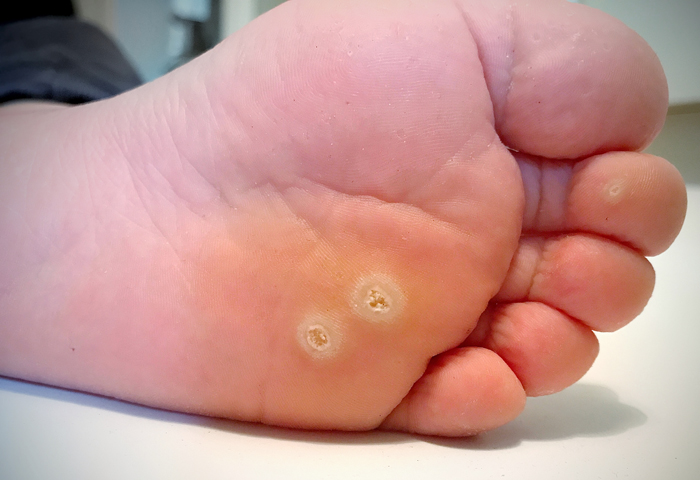
Verrucae or warts are infections of the skin commonly affecting the hands and feet. Often picked up at swimming pools and changing areas, this viral infection can often become troublesome either enlarging in size or spreading to the surrounding skin. They can become painful, particularly when found on the soles of the feet.
|

|
An example of how verrucae can develop if ignored.This large verruca had become painful making walking difficult.
Treatment for Verrucae & Warts At the Beehive and Brookland Foot Clinics we employ a variety of treatments for these unpleasant infections. Being a viral infection, they do not respond to antibiotic therapy.
The treatment methods used are of 3 types:-
Caustic chemicals :- often used on children or when the infection is not large or established.
Freezing or Cryotherapy :- the wart/verruca is frozen to destroy the viral cells. often has to be repeated to completely clear the infection.
Electrosurgery :- performed under local anaesthetic, the infected tissue is removed in one treatment. Being a surgical procedure, the wound takes a few weeks to heal and patients attend the surgery for after-care.Often used on large or stubborn warts that have not cleared with methods.
|
|
Ingrown Toenails
Sometimes the inner or outer edge of the nail curls and grows into the skin. Most commonly it is the 1st toe that is affected. We specialise at the surgery in permanently correcting this condition. This is achieved painlessly under local anaesthesia to produce a nail that is pain free but cosmetically acceptable.
|
 |
|
|